
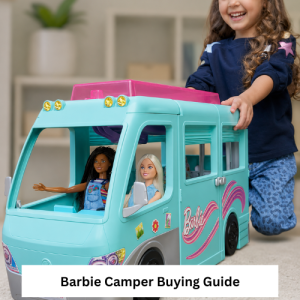
A Barbie camper can combine a doll vehicle, travel playset, furniture, storage, and multiple activity areas in one toy. However, parents should compare more than the number of included pieces because size, doll compatibility, moving parts, setup, and storage can affect how practical the playset is at home.
Some campers fold into a vehicle, while others open into a larger campsite with beds, kitchens, pools, slides, or outdoor accessories. These features vary by product, so verify before buying which dolls, furniture pieces, stickers, batteries, and accessories are included.
barbie-collectible shoppers should also check the manufacturer’s age guidance, assembly instructions, cleaning information, and replacement options before choosing a Barbie gift for kids.
How to Choose a Barbie Camper for Your Child
The right model should match the child’s age, available play space, dolls, and preferred type of imaginative play. A large transforming camper may offer more activity areas, but a smaller set can be easier to carry, close, clean, and store.
The best Barbie camper is not necessarily the model with the most accessories. A playset is more useful when the child can open it, arrange the furniture, seat the dolls, and pack the pieces away without constant frustration.
| Camper style | Best suited to | Main advantage | Possible limitation | What parents should verify |
| Full-size transforming camper | Children who enjoy large role-play setups | Multiple play areas in one set | Needs substantial floor and storage space | Open and closed size, doll fit, assembly |
| Compact camper van | Small rooms and portable play | Easier to move and store | Fewer activity zones | Carrying method, closure, included pieces |
| Chelsea camper | Children using small dolls | Sized for Chelsea-style play | Standard dolls may not fit | Doll scale and accessory size |
Compare Camper Layouts and Transforming Features
A transforming Barbie camper van can provide several play modes, but parents should check how much adult help is needed to change between them.
Look closely at:
- Hinged side panels
- Folding roofs
- Pull-out beds
- Rotating seats
- Detachable pools or slides
- Pop-up sections
- Small locking tabs
- Storage compartments
- Carrying handles
- Wheels and axles
Moving parts should open and close without excessive force. Children should not need to bend thin panels or pull on decorative pieces to transform the camper.
Check the Latches and Hinges
Read reviews and product instructions for information about closure points. A camper that will not stay closed can be difficult to carry and may lose accessories.
Verify whether the latch is intended for children to operate and whether the panels must be arranged in a particular order before closing.
Review Assembly Requirements
Some sets arrive mostly assembled, while others may require attaching wheels, stickers, slides, furniture, or decorative panels.
Check whether tools are needed, whether an adult must complete the setup, and whether stickers should be applied before the child begins playing.
Keep packaging and instructions until assembly is complete and all parts have been checked.
Decide Which Play Features Matter
A large accessory count may include many small food pieces, cups, blankets, utensils, or decorations. These can support Barbie playtime ideas, but they also create more cleanup and storage work.
A Barbie travel playset should include activity areas the child will actually use rather than features chosen only because they look impressive in photographs.
Possible play zones include:
- Driver and passenger seating
- Sleeping area
- Kitchen or dining area
- Bathroom area
- Outdoor firepit
- Pool or slide
- Hammocks
- Pet area
- Storage compartment
- Picnic or campsite setup
Ask the child which two or three features matter most before comparing products.
Evaluate Included Accessories
Check the written package list instead of counting accessories from photographs. Some images may show dolls or props that are not included.
Verify whether the set includes:
- Dolls
- Pets
- Furniture
- Bedding
- Food pieces
- Campfire accessories
- Cooking pieces
- Towels
- Cups and plates
- Stickers
- Slide or pool parts
- Storage clips
The Chelsea camper playset may be more suitable when the child prefers smaller dolls and compact accessories.
Small pieces should match the manufacturer’s age guidance. Store them away from younger siblings and pets.
Check Wheels and Vehicle Play
If the camper is expected to function as a rolling Barbie doll vehicle, inspect the wheel design and ground clearance.
Check whether:
- All wheels rotate
- Wheels remain attached during normal play
- The camper rolls on carpet and hard floors
- Panels stay closed while moving
- Dolls remain seated
- Accessories have storage during vehicle play
- The handle or roof can support normal carrying
A large camper may roll well but still be too bulky for a child to carry safely.
Safety and Build-Quality Checks
Review the manufacturer’s age recommendation and warnings before buying. Do not rely only on the age mentioned in a marketplace title.
Inspect the product for:
- Small detachable parts
- Sharp plastic edges
- Pinch points around hinges
- Loose wheels
- Long cords or straps
- Unsecured battery compartments
- Cracked panels
- Weak latches
- Pieces that require excessive force
Children should use the camper on a stable surface. Avoid placing a large open playset on beds, stairs, or elevated furniture where it may fall.
Do not allow children to sit, stand, or climb on the camper unless the manufacturer specifically states that such use is supported.
Compare Large and Compact Camper Options
A detailed Dream Camper playset can suit children who want several rooms and activity areas.
A pop-up camper vehicle may work better when quick setup and easier storage are more important.
Choose a large camper when:
- The child frequently plays with several dolls
- A permanent play area is available
- Multiple activity zones are important
- The family has room for accessory storage
Choose a compact camper when:
- The playroom is small
- The set must be moved often
- The child prefers shorter play sessions
- Faster cleanup is important
- Fewer small pieces are preferred
Conclusion
A Barbie camper should fit the child’s dolls, play style, age, room size, and ability to manage moving parts. Compare open dimensions, seat compatibility, storage, accessory size, and setup before ordering. A carefully selected model can provide enjoyable travel and adventure play without creating unnecessary frustration or clutter.
FAQ
Do Barbie campers usually include dolls?
Some do, while others include only the camper and accessories. Check the exact package list before buying.
Will every Barbie doll fit in a Barbie camper?
Not necessarily. Check doll height, seat size, roof clearance, and whether the camper is designed for standard or small dolls.
How much space does a Barbie camper need?
It depends on the model. Measure both the closed storage size and the fully opened play area before ordering.
Are Barbie camper accessories easy to lose?
Small food, bedding, and camping pieces can be lost easily. Use labeled storage and return pieces to the camper after play.
How should parents clean a Barbie camper?
Use the manufacturer’s cleaning instructions. A soft damp cloth is commonly suitable for plastic areas, but avoid soaking stickers, hinges, and battery sections.
